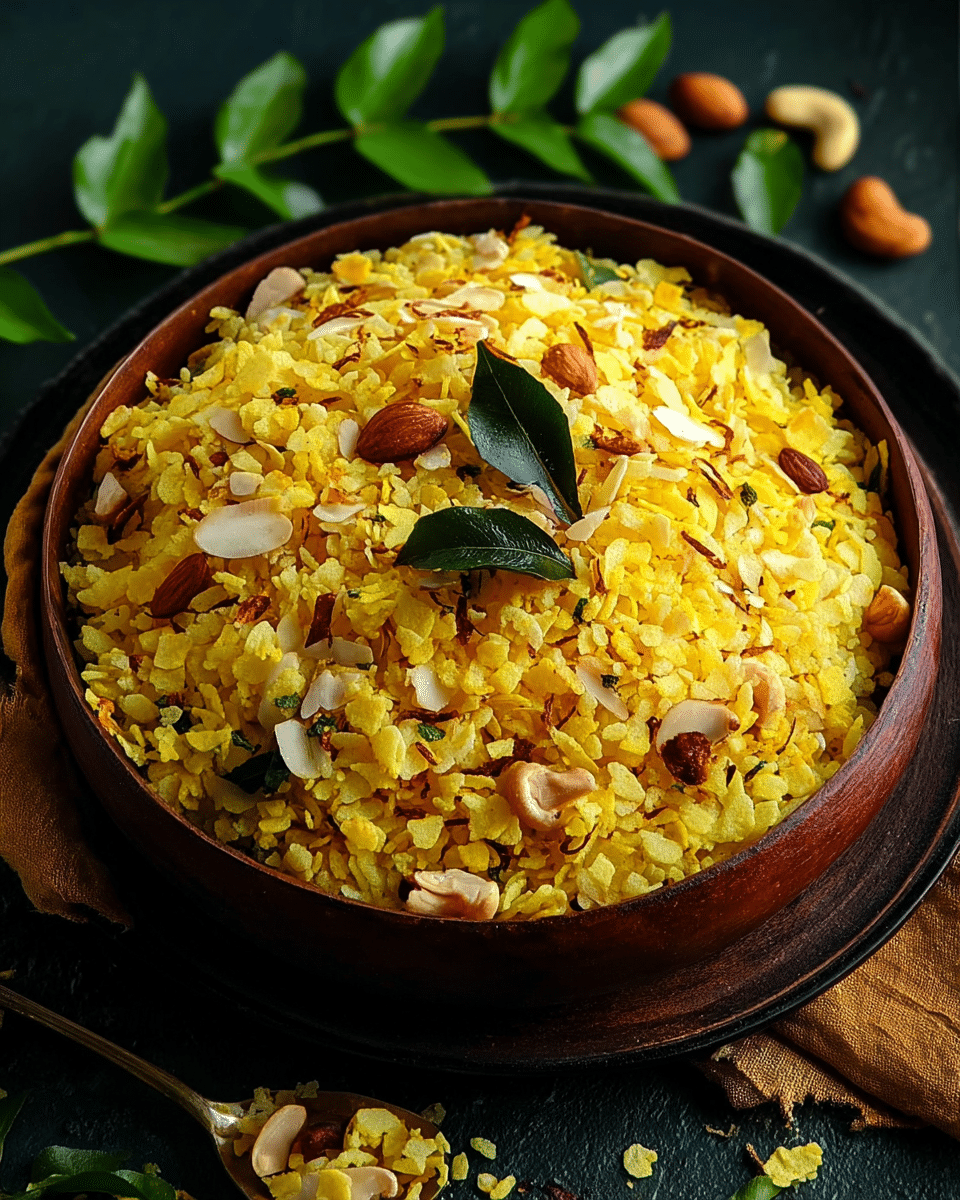
This Poha Chivda is a flavorful, crunchy, and addictive Indian snack mix made with flattened rice, peanuts, cashews, and a host of fragrant spices. Whether you’re celebrating a festival or just want something delicious to go with your tea, this easy-to-make treat hits all the right notes.
Unlike store-bought versions, homemade chivda gives you control over oil, spice, and ingredients. It’s a healthier alternative with less oil and no preservatives. The combination of spicy green chilies, nutty roasted peanuts, and a touch of sweetness from jaggery makes every bite irresistible. Serve it during Diwali, Holi, or just as a snack to brighten your afternoons.
Full recipe:
Ingredients:
-
3½ to 4 cups (250 grams) thin or medium poha (flattened rice)
-
2 to 3 tablespoons oil (for roasting) OR 1 cup oil (for deep frying)
-
¼ cup peanuts
-
¼ cup cashews (split)
-
2 tablespoons roasted gram (chana dal) (optional)
-
2 tablespoons raisins (optional)
-
¼ cup dried coconut slices (copra) (optional)
-
4 garlic cloves, crushed
-
2 sprigs curry leaves
-
2 to 4 green chilies, slit
-
¼ to ½ teaspoon red chili powder
-
¼ teaspoon turmeric powder
-
½ teaspoon salt (adjust to taste)
-
1 tablespoon jaggery (grated or powdered) or sugar
-
¼ teaspoon cumin seeds (optional)
Directions:
Pan Roasted Poha Chivda:
-
Heat a wide heavy bottom pan on medium heat.
-
Add 1½ cups poha and roast them until light and crispy. Stir often. Roast in 2-3 batches if needed.
-
Transfer roasted poha to a wide bowl and cool.
-
In a small pan, heat 1 tbsp oil. Fry peanuts until golden. Then add cashews and fry until light golden.
-
Optionally add coconut and roasted gram; sauté until coconut is golden.
-
Remove and add to roasted poha.
-
In the same pan, add 1-2 tbsp more oil. Fry green chilies, garlic, and curry leaves until crisp. Add cumin seeds if using.
-
Add raisins and fry until they swell.
-
Turn off the heat and immediately add red chili powder, turmeric, salt, and jaggery. Stir quickly to melt.
-
Pour this tempering over poha and mix while still hot to ensure even coating.
-
Cool completely and store in an airtight jar.
Prep Time: 10 minutes
Cooking Time: 15 minutes
Total Time: 25 minutes
Kcal: 203 kcal per serving
Servings: 6
Cultural Significance
This snack is deeply rooted in Indian tradition. In many regions, making Chivda is a family ritual that signals the beginning of the festive season. In Maharashtra, for example, Poha Chivda is a Diwali staple. Families prepare large jars of it in advance and distribute it as part of their “faraal” (Diwali snack collection) to friends and relatives. Its dry nature and long shelf life make it perfect for gifting and storing during festival times.
Beyond the festivals, it’s also a snack synonymous with Indian kitchens. It’s easy to make in bulk, highly customizable, and can be adapted to suit different flavor preferences—from mildly sweet to spicy or even nut-free for those with allergies.
Healthier Alternative to Store-Bought Snacks
One of the key advantages of Poha Chivda is that it offers a healthier, homemade alternative to commercially packaged chips and namkeens. By making it at home, you can control the amount and quality of oil used, adjust the spice levels, and include or exclude specific ingredients based on your dietary needs. You also eliminate preservatives, artificial flavor enhancers, and excessive sodium often found in packaged snacks.
For those who are health-conscious, pan-roasted and oven-roasted versions use significantly less oil compared to deep-fried variations, yet still yield a crispy and flavorful snack. Using organic poha and cold-pressed oils like coconut or groundnut can further increase the health quotient.
Types of Poha Used
Poha is available in various thickness levels—thin, medium, thick, and paper-thin. The choice of poha significantly impacts the texture and cooking method of your chivda.
-
Thin Poha: Best suited for pan or oven roasting. It crisps up quickly and offers a light, airy texture.
-
Medium Poha: Versatile and can be used for both roasting and frying. It provides a balanced crunch and holds up well to tempering.
-
Thick Poha: Ideal for deep frying as it puffs up when immersed in hot oil, resulting in a puffed, crunchy snack.
-
Paper-Thin Poha: Extremely delicate and usually needs to be sun-dried before tempering. It’s less commonly available and used in specific regional recipes.
Choosing the right poha ensures you get the ideal crunch and texture, which is the hallmark of a good chivda.
Texture and Flavor Profile
What makes Poha Chivda so beloved is its multidimensional flavor and texture. It’s a symphony of crispy rice flakes, crunchy nuts, sweet raisins, and aromatic tempering of spices. The use of green chilies and red chili powder brings the heat, while jaggery or sugar balances it with subtle sweetness.
Each bite offers a combination of spicy, sweet, nutty, and savory notes. The crunch from peanuts and cashews, combined with the delicate crispness of poha and the occasional chewy raisin or crisp fried garlic, makes it an engaging snack for your taste buds.
Moreover, its flavor intensifies a few hours after mixing, once the spices meld into the poha, making it even more delicious the next day.
Customizations and Variations
One of the most appealing aspects of Poha Chivda is how easily it can be tailored to suit your tastes or dietary restrictions.
-
Spice Adjustments: You can increase or reduce green chilies and red chili powder to adjust the heat level. For kids, omit the chilies entirely and opt for a milder version.
-
Sweetness: Jaggery or sugar can be increased or omitted. Some regions use a more pronounced sweet profile.
-
Nuts and Seeds: Beyond peanuts and cashews, you can also add almonds, melon seeds, or sunflower seeds for more texture.
-
Herbs and Spices: Asafoetida (hing), curry leaves, and cumin seeds are traditional but optional. Some also like to add fennel seeds or black sesame seeds.
-
Oily vs. Oil-Free: Go for a deep-fried version for traditional festive feel, or opt for pan-roasted for a light daily snack.
-
Other Add-ins: Dried fruits like dried cranberries or dates can be added for a gourmet touch. For more crunch, sev or boondi can be sprinkled in after mixing.
Shelf Life and Storage Tips
Poha Chivda, when stored properly in an airtight container, can last up to two weeks at room temperature. Ensure it’s completely cooled before transferring it to jars to avoid moisture build-up, which can make the poha soggy or stale.
Keep it away from direct sunlight and humidity. A cool, dark pantry is the best place to store it. Always use a dry spoon to scoop out the chivda to maintain its crispness.
If you’ve made a large batch, you can even refrigerate part of it to retain freshness for a longer period. However, it tastes best when fresh and crisp within the first 7-10 days.
Serving Suggestions
Poha Chivda is extremely versatile in how it’s served. It pairs wonderfully with a steaming hot cup of chai or filter coffee. It’s also great as a midday snack, a school tiffin treat for kids, or even as a light pre-dinner appetizer.
For parties, you can jazz it up with a squeeze of lemon, chopped onions, tomatoes, coriander, and sev to make a quick chaat-style snack. It’s also travel-friendly, making it ideal for picnics, road trips, or airplane munching.
Many people even enjoy it as a topping over upma or curd rice to add a crunchy twist. In some households, it’s mixed into puffed rice or other chivda varieties to make a personalized “mix namkeen.”
Regional Variations
Different parts of India bring their own flair to Poha Chivda:
-
Maharashtrian Chivda: Typically uses thin poha with a balance of spice and sweetness. Includes peanuts, raisins, and sugar or jaggery.
-
Gujarati Chivda: Leans toward the sweeter side with sugar as a dominant ingredient. Often includes fennel seeds and fried lentils.
-
South Indian Chivda: May feature fried curry leaves, lots of garlic, and even roasted coconut for a tropical aroma.
-
North Indian Chivda: More robust in spice, often includes dry mango powder (amchur) or chaat masala for tanginess.
Each version reflects local taste preferences, ingredients available, and culinary traditions.
Why You’ll Love Making It at Home
Making Poha Chivda at home is a rewarding experience. It comes together quickly, fills your kitchen with inviting aromas, and gives you the satisfaction of serving something that’s both delicious and nourishing.
It’s cost-effective and allows you to avoid packaged snacks that are often high in trans fats, sodium, and artificial flavoring. Whether you’re an experienced cook or a beginner in the kitchen, Poha Chivda is a forgiving recipe that welcomes improvisation.
It’s also a great way to engage with food traditions, pass down culinary skills to the next generation, and keep festive customs alive in your home.
Conclusion
Poha Chivda is more than just a snack—it’s a celebration of Indian flavors, tradition, and home-cooked love. Its simplicity, versatility, and irresistible crunch make it a staple in countless Indian households. Whether you’re making it for Diwali, preparing it for your kids’ snack box, or just looking for a tasty tea-time companion, Poha Chivda never disappoints.
The ease of preparation, long shelf life, and infinite customization options make it an essential addition to your snack repertoire. Once you’ve tried making it at home, you’ll never go back to store-bought chivda again.